contact@enstsa.edu.dz
Moodle
Visitor 22822 unique visitors
Logo de l'école

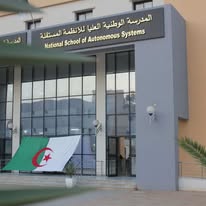
National Higher School of Autonomous Systems Technology

Our Training

Autonomous Systems Engineer

Training Overview

Autonomous systems are a discipline that requires cross-disciplinary engineering skills, both general (mathematics, programming, mechanics) and specific to autonomous systems (control engineering, artificial intelligence, computer vision, sensor data fusion).

Proactive and solution-oriented, you must monitor technological developments in order to recommend improvements to the solutions being developed.

Autonomous systems are making their way into our professional, urban, and domestic environments. Imagine fleets of intelligent robots collaborating in manufacturing plants, advanced logistics solutions for warehouses like those of Amazon, crewless cargo ships, smart grids, or interconnected smart home appliances. These are just a few examples of what we refer to as autonomous systems.

The Autonomous Systems Engineer program aims to train specialists capable of designing, developing, integrating, and managing intelligent systems that can operate independently or semi-autonomously. It covers the full range of technologies that enable robots, drones, autonomous vehicles, and other intelligent platforms to perceive their environment, make decisions, and act safely and efficiently.

Training Objectives

Scientific and Technical Skills

To train engineers with strong scientific and technical skills in the fields of artificial intelligence, robotics, control engineering, and embedded electronics.

Mastery of Architectures

Develop proficiency in the hardware and software architectures dedicated to autonomous systems (sensors, actuators, processors, communication).

Modeling and Simulation

Provide training in methods for modeling, simulating, and optimizing the behavior of autonomous systems.

Safety and Ethics Challenges

Raise awareness of safety, security, and ethical issues related to the use of autonomous systems in both civilian and military contexts.

Acquired Skills

Design and Integration

Designing and integrating robotic platforms and autonomous drone systems.

Advanced Programming

Advanced programming skills for embedded intelligence, machine learning, and signal processing applications.

Sensors and Perception

Develop expertise in sensors and perception technologies, including computer vision, LIDAR, radar, GPS, and data fusion.

Control and Navigation

Real-time control and management of complex systems.

Cybersecurity and Communication

Ensuring cybersecurity and effective communication within autonomous systems networks.

Project Management

Managing technological projects and driving innovation in the domain of intelligent systems.

Application Areas"

Industrial Robotics

Collaborative robots, automated manufacturing processes, and intelligent material handling systems.

Autonomous Vehicles

Crewless land, air, and maritime vehicles equipped with advanced navigation systems.

Intelligent Logistics

Advanced logistics systems, automated warehouses, and delivery drones.

Home automation and IoT

Smart appliances, connected buildings, and smart cities represent the future of the Internet of Things.

Smart Grids

Smart grids, intelligent energy management, and automated distribution systems are transforming the energy sector.

Healthcare and assistance

Medical robots, assistive systems, connected health technologies.

Contact

NHSAST, Mahelma, Algiers.

contact@enstsa.edu.dz

Newsletter

Stay informed about our news and events by signing up for our newsletter.

© 2026 National Graduate School of Autonomous Systems Technology. All rights reserved.